
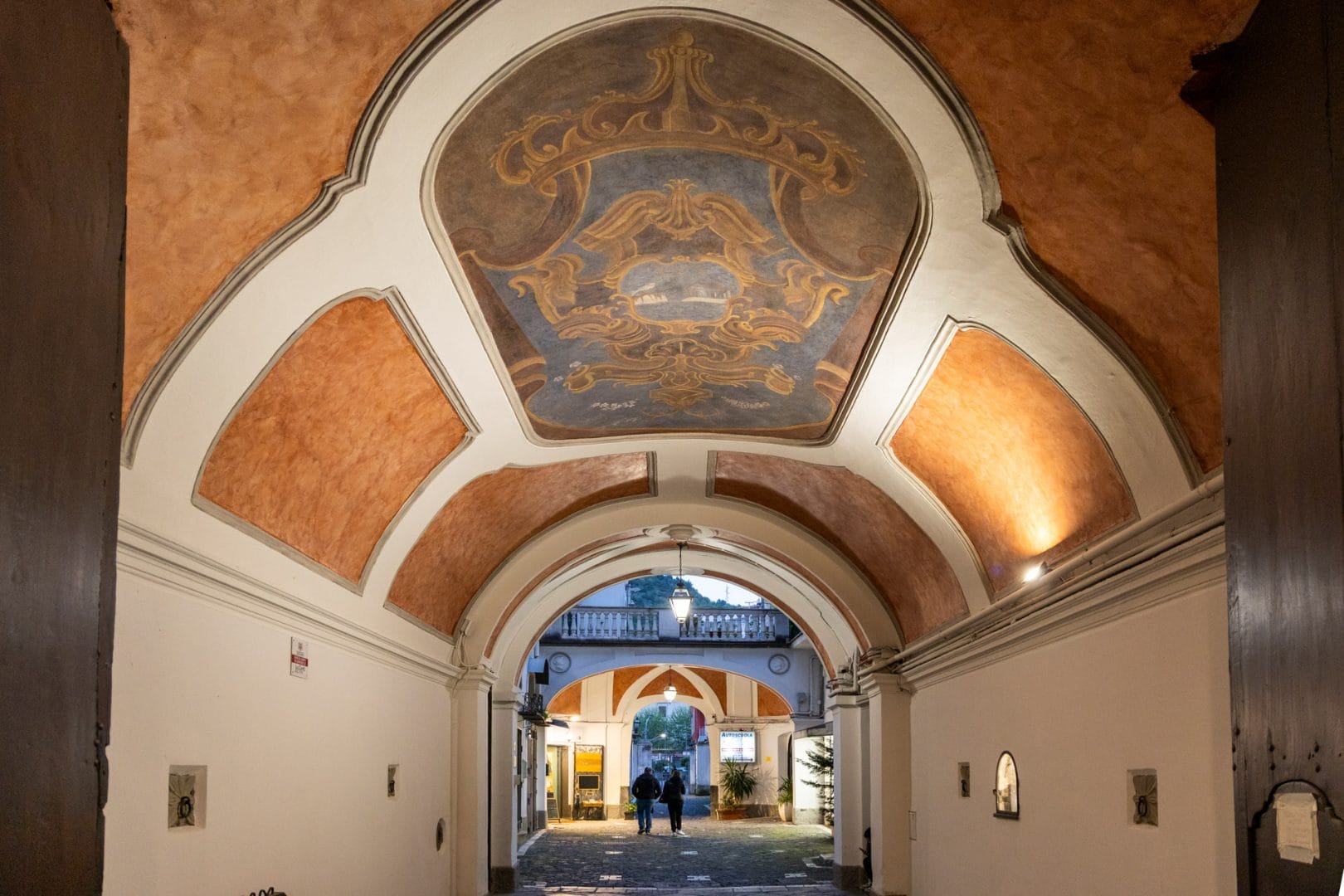
Palazzo Palumbo
The Palumbo family came to Cava from San Giovanni a Piro, near Policastro, in the early sixteenth century. They settled in Passiano, where they were granted lands and woods by the Abbey of the Holy Trinity. Their representatives were masters in weaving the renowned “della Cava” canvases, and later they devoted themselves to the trade of silk drapery, brocades, lace and fine fabrics. In the church of Passiano they held the patronage of the chapel of Santa Maria del Carmine, in the front of the left nave, which is still preserved.
In the seventeen-twenties Carmine Palumbo, “publicus mercator”, moved his family to the houses in the Borgo. He and his brother Giuseppe, parish priest of the Church of the Salvatore in Passiano, were the builders of the family's substantial estate, which was gradually increased throughout the eighteenth century.
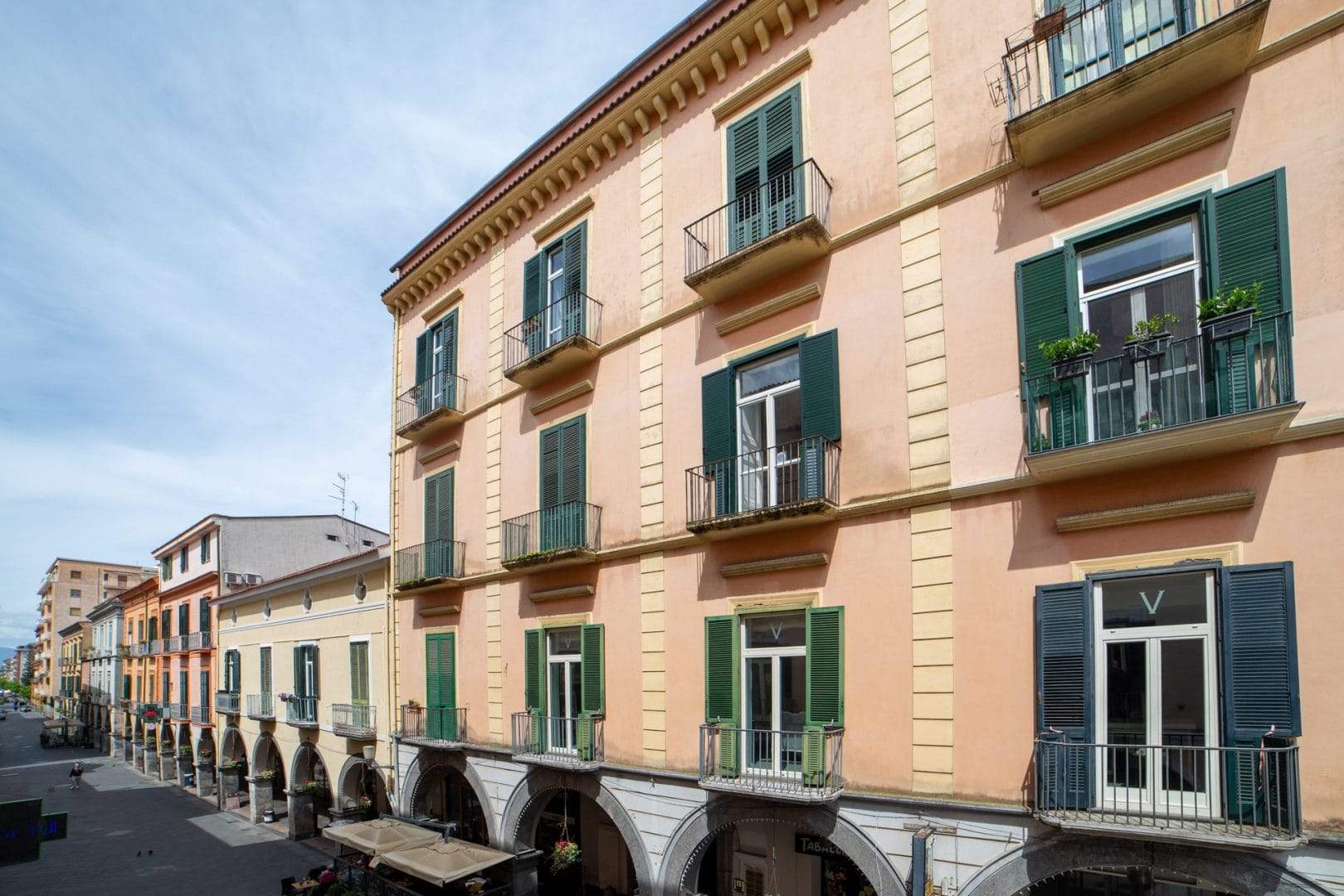
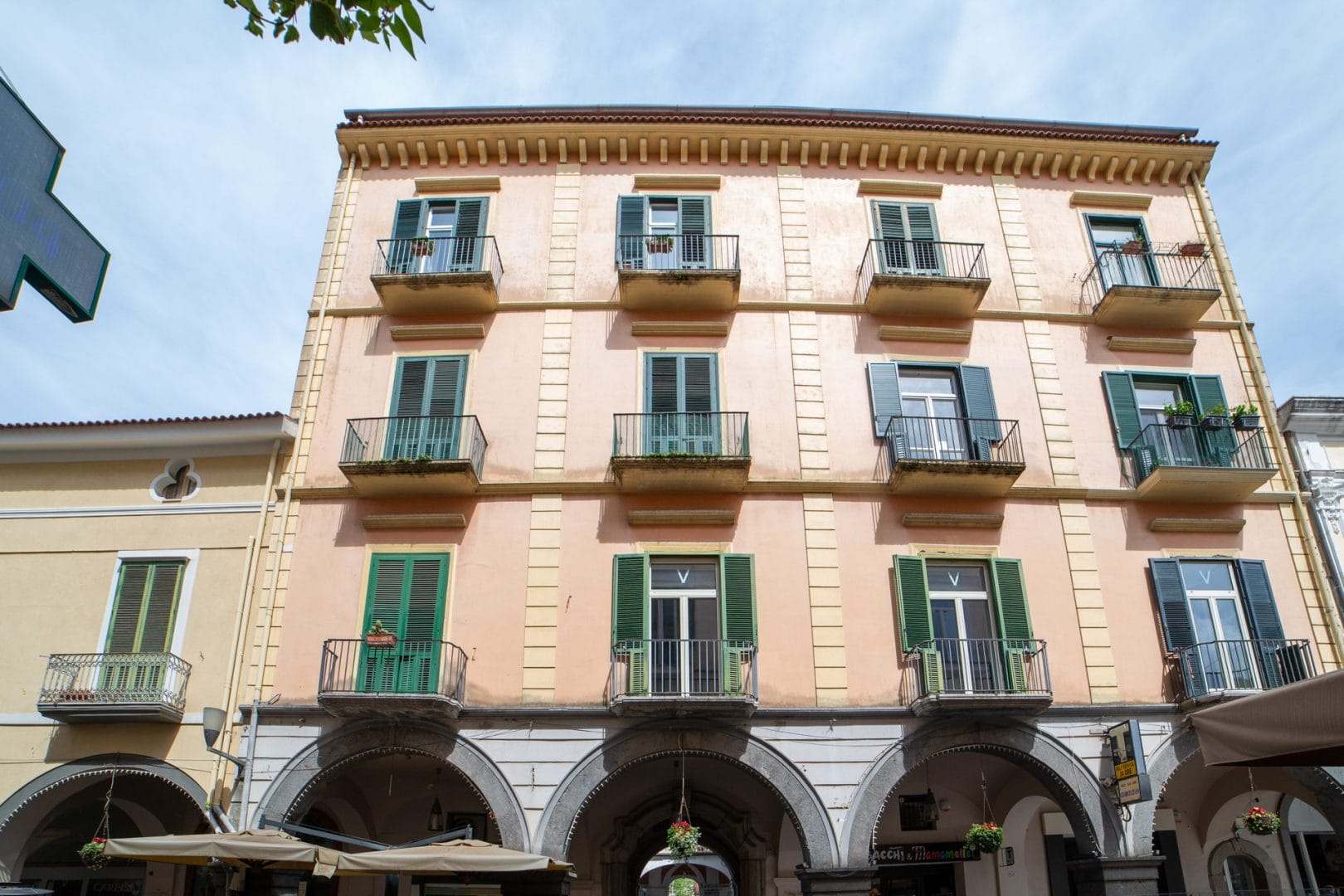
In the eighteenth century, on the site where the Palazzo Palumbo stands today, there were two residential units. In the 1720s, the Palumbos settled in the north-facing house, bordering the Palazzo Giordano.
In the “Catasto onciario” of around 1752, in the entry for Domenico Palumbo, “who lives nobly”, the property is described as follows: ”He owns a site with a palazzo-style house in the Borgo of this City, dependent on Sant’Adiutore, with an adjoining garden, for his own dwelling, beneath which house there are two shops”.
Later, in January 1754, the same Domenico and his son Carmine rented the other house, adjoining theirs, which was owned by the Monte De Ferrante, established in the church of San Nicola di Pregiato. Afterwards, the same house became the family's property, thus forming a single large dwelling. From a 1765 document it appears that, at the back of the courtyard, there was a typical walled Mediterranean garden, “with a few citrus trees, fruit trees and vine arbours, with a bird trap”.
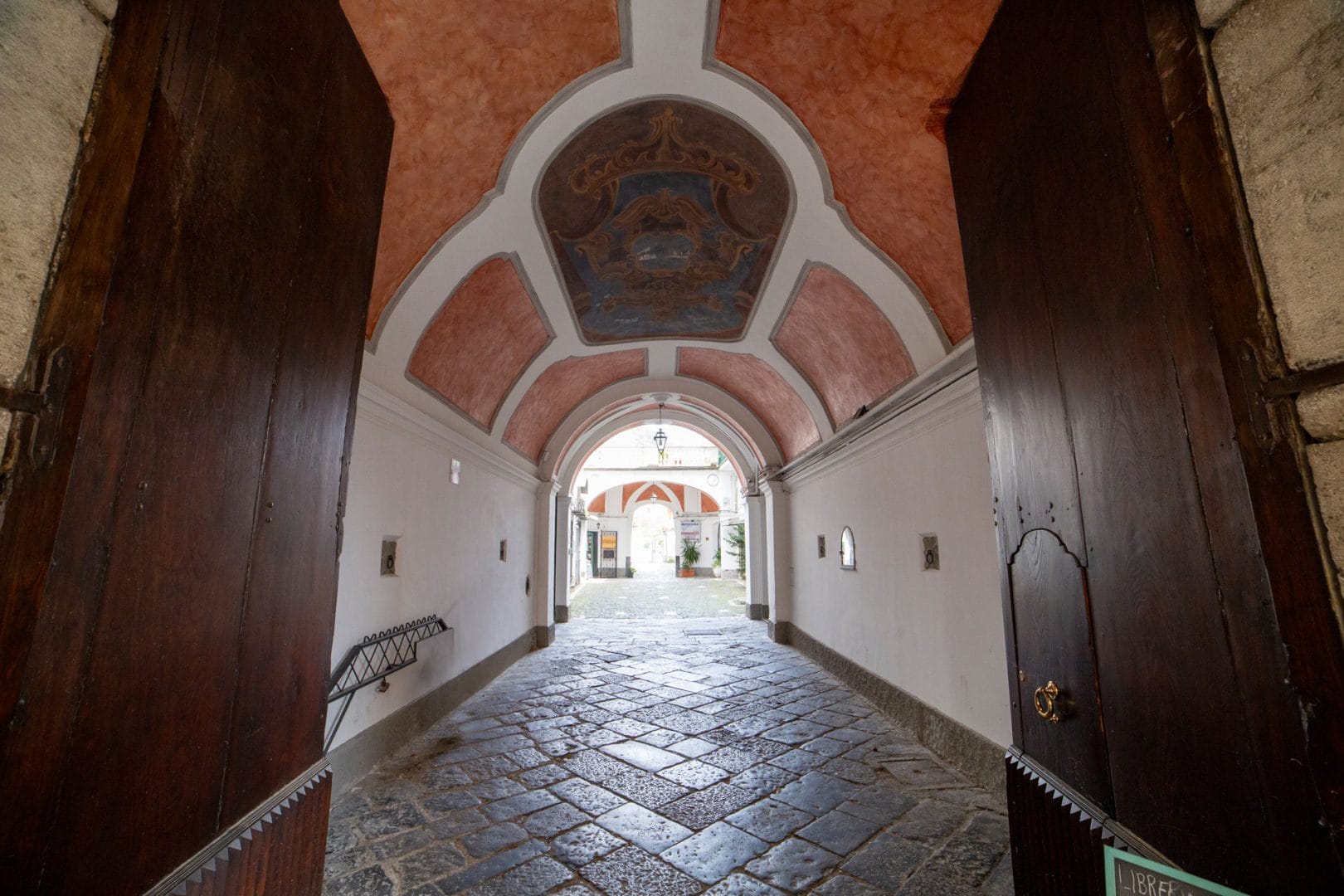
In 1776, after demolishing the old houses, Carmine Palumbo had the new palazzo built to a unified design. To form the grand noble entrance hall, one of the shops was abolished. To this period must also be dated the fresco of the coat of arms on the vault of the entrance hall, the portal with its bollards and the carved stone wellhead in the courtyard.
In the stately first-floor apartment, the family chapel is still preserved, enclosed in a cupboard, complete with an eighteenth-century inlaid marble altar.
In recent years, having abandoned commerce, the Palumbos dedicated themselves to the administration of their substantial estate and the study of law. Francesco Palumbo and his nephew Filippo, doctors in *utroque jure*, practiced as advocates in Naples at the Tribunal of the Vicaria; Monsignor Nicola was a canon of the Cathedral of Cava. In 1773 Gennaro Palumbo, by purchasing the patronage of the chapel of San Francesco di Paola in the church of Santa Maria dell’Olmo, styled himself “Patricius Cavensis”, as can be read on the plaque that is still preserved.
The family was very careful to contract illustrious relationships. We remember the close ties with a large part of the patrician and merchant bourgeois families of Cava: Genovese, Consiglio, Siani, Rinaldo, barons of San Rufo, Atenolfi, marquesses of Castelnuovo, Ferrari, Ioele, Notargiacomo, Vitale, Salsano and Benincasa.
In May 1867, in the inventory of the inheritance of Don Pasquale Palumbo, the palazzo and the adjacent land are described as follows: “The large townhouse held by the family in the Borgo grande of Cava is composed of many upper and lower rooms, with three storerooms on the public square and a flat arable plot of land, in the place known as behind the Borgo, bordering to the East with the street called via del Lauro and is intersected by the railway”; that is, the Palumbo property extended as far as via del Lauro, where today corso Principe Amedeo, the railway line and the Villa Alba nursing home are located.
In the twentieth century, new lustre was brought to the family by lawyer Amedeo Palumbo, a municipal and provincial councillor, and his sister Olga, “madame Palumbo”, a long-standing teacher of the French language and one of the first women in Cava to graduate from the University of Naples L'Orientale.
And finally, the renowned sports journalist, Dr Gino Palumbo (1921-1987), editor of Il Corriere d’informazione and later of La Gazzetta dello sport, who was awarded the “Cavesi nel mondo” prize in 1982. In 1986 he received the “Una penna per lo sport” award at the Foro Italico.
edited by Salvatore Milano
for the Study Centre for the History of Cava de’ Tirreni